As part of my school’s Holistic Development Program, I participated in cooking sessions twice a week over three months. Although I had always been interested in cooking, I had never learnt it formally or explored baking and international cuisines. My goal was to improve my culinary skills, understand different ingredients, and learn new techniques with proper guidance. I wanted to step out of my comfort zone, experiment with recipes, and learn how to adjust proportions, textures, and flavors. Through consistent practice, I hoped to gain confidence in cooking independently while also understanding the cultural, global, and ethical dimensions behind food preparation.

LO1 – Identify own strengths and develop areas for growth
Cooking taught me that growth often begins with acknowledging what I don’t know. Initially, I struggled with precision, timing, and understanding how ingredients behave. I often added too much or too little water, misjudged measurements, or overmixed batter. Instead of seeing these as failures, I used them to become more reflective, paying attention to what went wrong and why. This helped me recognize one of my strengths: the ability to learn through repetition and feedback. At the same time, I realized I needed to develop more patience and accuracy. Working on these areas made me more confident, and I felt proud of how I slowly improved. I also learned that knowing my weaknesses doesn’t limit me; it guides me toward becoming better.
LO6 – Engagement with issues of global significance
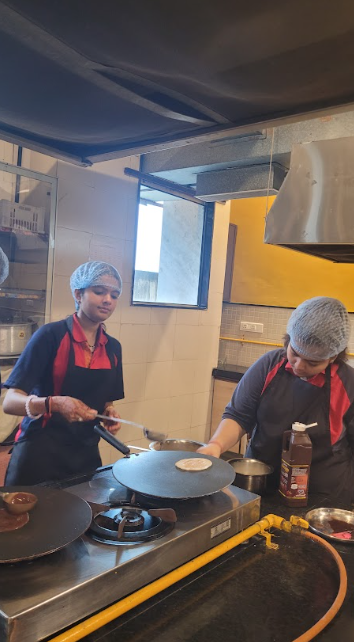
Cooking made me more aware of global issues such as sustainability, food waste, and responsible consumption. As I practiced different recipes, I started noticing how ingredient choices impact the environment, whether through packaging, sourcing, or food miles. This experience strengthened my open-mindedness, because I began exploring sustainable alternatives, reducing waste, and reusing ingredients creatively. I understood how global issues like hunger, nutrition, and climate change are deeply connected to daily choices in the kitchen. Becoming aware of these issues made me feel more responsible and conscious of my role in a larger system. It encouraged me to think beyond taste and technique, and to understand food as part of global well-being.
LO7 – Recognize and consider the ethics of choices and actions
Throughout this activity, I became more aware of the ethical dimensions of cooking, such as hygiene, sourcing ingredients responsibly, avoiding unnecessary waste, and respecting cultural recipes. When cooking international cuisines, I realized that adapting a recipe requires cultural sensitivity, not just creativity. This helped me develop the principled learner profile attribute, as I learned to make decisions thoughtfully and responsibly. I also reflected on the ethics of using packaged ingredients, leftover food, and water consumption. Understanding these factors made me approach cooking with more care and intention. It taught me that every choice in the kitchen, big or small, has an impact on health, environment, and culture.
This experience helped me grow as a reflective, open-minded, and principled learner. I gained confidence in my cooking skills, became more aware of sustainability, and learned to make thoughtful, ethical decisions. The highlight was realizing how cooking connects creativity with responsibility. If I repeat this experience, I’d experiment with more cuisines while continuing to focus on reducing waste and improving technique.