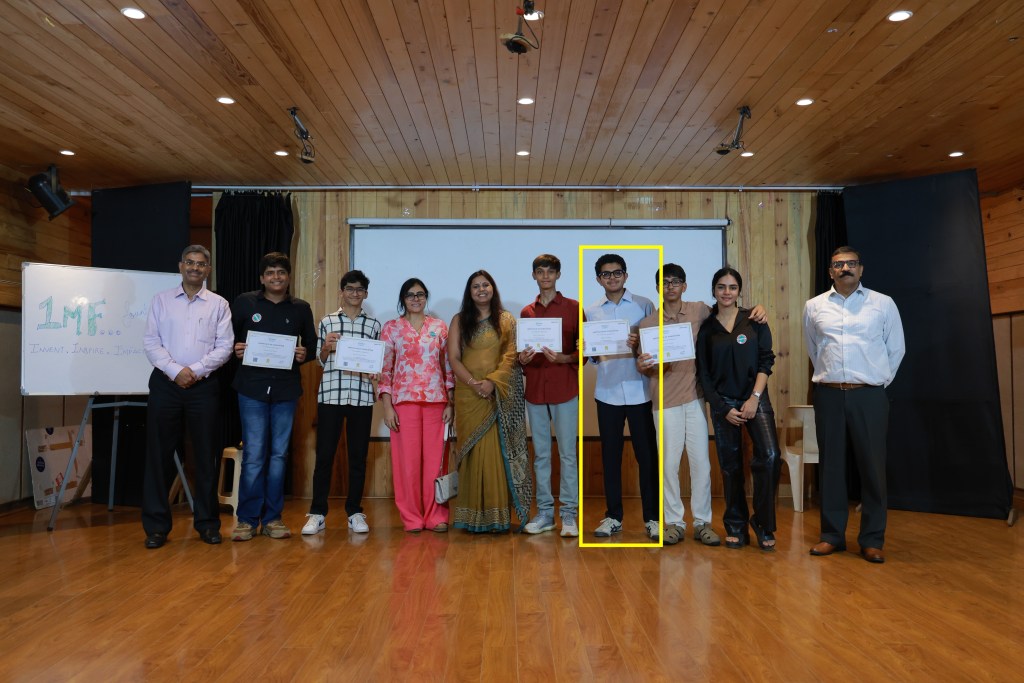
Introduction: Our team participated in the One Million Founders event organized by Consat Orahi. In this event, we had to come up with an innovative business solution and present it in a pitch format to a panel of board members, including the CEO of Consat Orahi. Our idea focused on helping local fruit and vegetable vendors increase their sales through a digital platform that connects them directly with customers, basically an uber for produce vendors. We worked as a team to plan, research, and design our pitch. At the end of the event, we were awarded a certificate for our participation and efforts.
LO1 – Identify own strengths and develop areas for growth: This event helped me recognize my strengths in communication and idea generation. I realized I am good at presenting concepts clearly and confidently to an audience. However, I also noticed that I need to improve my technical knowledge in areas like market analysis and app structure design. While I could explain the business idea well, I found it harder to explain the more detailed parts of how the platform would work. This made me understand where I can grow and what skills I should focus on next time.
LO2 – Demonstrate that challenges have been undertaken, developing new skills in the process: The biggest challenge was creating a solid and realistic business idea in a short amount of time. We had to think about marketing, pricing, and the practical problems vendors face daily. It required research, creativity, and teamwork. Through this process, I learned how to brainstorm effectively, divide work properly, and prepare a professional pitch presentation. I also developed problem-solving skills by thinking about real-life business challenges.
LO3 – Demonstrate how to initiate and plan a CAS experience: Our team had to plan everything from scratch. We decided what problem we were addressing, divided the research work, and created the structure of the pitch. We assigned roles like who would talk about the problem, who would explain the solution, and who would handle the conclusion. Planning the flow of the presentation and making sure everyone knew their parts helped us stay organized. This taught me how to take initiative, plan ahead, and manage a creative project step by step.
LO4 – Show commitment to and perseverance in CAS experiences: Preparing for the event required consistent effort and coordination. We met several times after school to practice and refine our pitch. Even when our first few drafts were not perfect, we kept improving them. I stayed committed to the process because I wanted our team to present a meaningful idea that could actually help local vendors. This taught me how persistence and effort pay off in the end.
LO5 – Demonstrate the skills and recognize the benefits of working collaboratively: This project was all about teamwork. Every member brought something different to the table—some were good at research, others at design or presentation. We learned to respect each other’s ideas and combine our strengths. Working together also made the process less stressful and more enjoyable. I realized that when people collaborate well, the final outcome becomes much stronger and more creative.
LO6 – Demonstrate engagement with issues of global significance: Our idea addressed a global issue: supporting small-scale vendors and promoting sustainable local business. Many local sellers struggle because of competition from supermarkets and online delivery apps. By creating a platform that connects them directly with customers, we aimed to promote fair trade and economic growth at the community level. This experience helped me understand how entrepreneurship can be used to solve real-world problems.
LO7 – Recognize and consider the ethics of choices and actions: We made sure our idea was ethical and beneficial to all stakeholders. We discussed pricing policies that would be fair to both vendors and customers. We also planned to include transparency in transactions to avoid exploitation. Throughout the process, we focused on honesty, inclusivity, and sustainability. This helped me realize that ethics are not separate from business—they are a key part of creating solutions that truly help people.
Conclusion: The One Million Founders event was a great learning experience that pushed me to think creatively and practically. I developed new skills, learned the value of teamwork, and understood how innovation can solve real social and economic issues. Presenting our idea in front of professionals gave me confidence and motivation to keep working on ideas that can make a difference. This activity helped me grow both as a thinker and as a responsible learner.