1. Description of the Activity and Goals
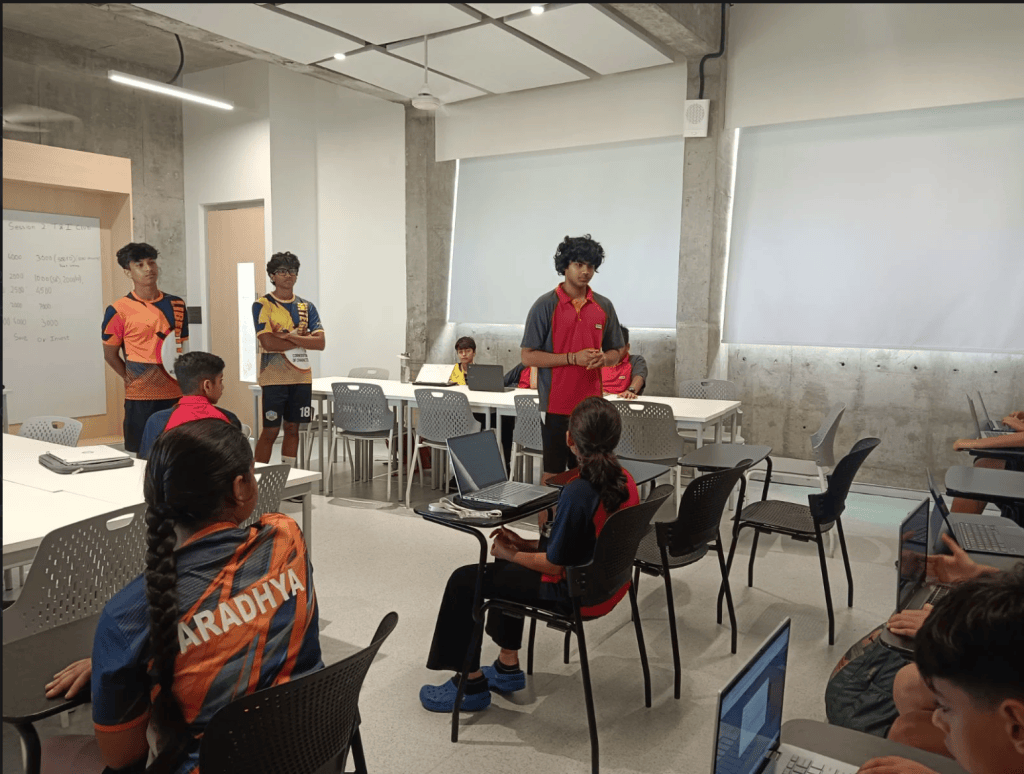
Together with two of my friends, I founded a Trading and Investment Club at my school to introduce students from grades 7–9 to the fundamentals of finance, trading, and long-term investing. Our goal was to simplify financial concepts and inspire younger students to think critically about money management and future planning. Through interactive activities, discussions, and mock trading simulations, we wanted to make the sessions both fun and educational. Personally, I aimed to strengthen my leadership, teaching, and organizational skills by co-leading the club, planning lesson structures, and ensuring that the learning environment was engaging and accessible for everyone.
2. Reflection on Learning Outcomes
LO1: Identify own strengths and develop areas for growth
I realized one of my strengths was explaining difficult ideas in simple, relatable ways. Students often understood better when I used examples or connected finance to things they already knew. However, I also noticed I sometimes became impatient when the same questions were asked repeatedly. Recognizing this weakness pushed me to work on patience and empathy. Leadership isn’t just about knowledge—it’s also about adapting to different learning speeds and supporting others.
LO2: Undertake challenges and develop new skills
One of the biggest challenges was adjusting the content so it was understandable for younger students while still being meaningful. I had never done anything quite like this before, so I had to learn how to simplify and present financial ideas creatively, often using simulations and games. This helped me develop new teaching and communication skills, which I believe will be very useful in the future, especially in any role that involves leadership or public speaking.
LO3: Demonstrate how to initiate and plan a CAS experience
Starting this club with my friends required significant planning. We created a structure for the sessions, sought approval from teachers, and organized schedules. The hardest part was anticipating what would actually engage the students, but through trial and error we built a system that worked. This process taught me how important it is to break down big goals into smaller, achievable steps. I feel more confident now about planning and initiating future projects.
LO4: Show commitment and perseverance
There were weeks when it was difficult to balance the club with my schoolwork, but showing up consistently was essential. My commitment was not just to the project but also to the students who looked forward to the sessions. Sticking with it despite the challenges gave me a sense of responsibility and perseverance, which I know will help me in other areas of my life.
LO5: Work collaboratively
Although I often took the lead in explaining, this was not a solo effort. Working with my two friends made the workload easier to manage, and we supported each other in planning and presenting. Collaboration also extended to the younger students, whose questions and ideas often made the sessions more engaging. I learned that teamwork is not just about dividing tasks but about valuing different perspectives.
LO6: Engagement with issues of global significance
Financial literacy is a global issue—millions of people enter adulthood without the knowledge to manage money responsibly, which can cause serious problems later in life. By introducing these ideas early, I felt we were contributing to a larger cause. This made the project feel meaningful beyond just our school, as it connected to a global challenge of preparing the next generation for financial independence.
LO7: Ethics of choices and actions
A key responsibility in leading this club was teaching responsibly. We wanted students to understand that investing isn’t about getting rich quickly or taking reckless risks. Instead, we emphasized ethical decision-making, long-term planning, and responsible money management. This helped me reflect on the importance of setting a good example as a leader, especially when teaching impressionable younger students.
3. Final Takeaway
This CAS activity allowed me to grow as a leader, communicator, and creative thinker. It connected strongly with my subjects, particularly Business and Economics, by allowing me to apply what I’ve learned in class to a real-world setting. The highlight was seeing students genuinely engaged and asking thoughtful questions—it felt rewarding to know that I had sparked their interest.
If I were to repeat this experience, I would add more group-based projects so that students could collaborate with one another as well as with us. Overall, the activity gave me a sense of accomplishment and enjoyment. It challenged my patience, strengthened my planning and leadership skills, and made me more aware of the global importance of financial literacy. I hope to continue growing the club and inspiring more students to think critically about their financial future.