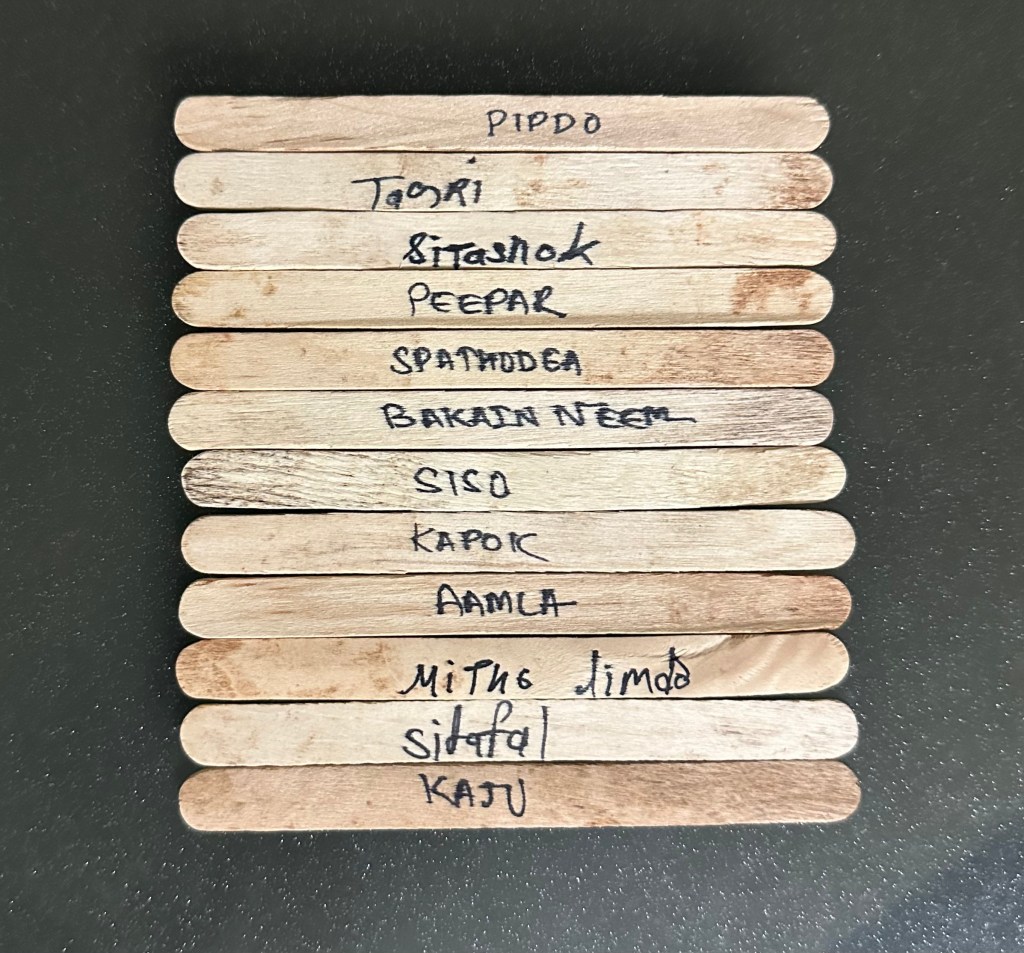
Plantation Drive
Over the past several months, I traded my textbooks for a spade and participated in a series of Plantation Drives. This activity was a collaboration between our school clubs and local NGOs, aimed at re-greening our local environment. My personal mission was to ensure that I planted at least 30 native saplings. It was more than just a weekend activity; it was a hands-on lesson in ecology, patience, and the physical effort required to heal the environment. From the humid mornings of September to the crisp air of January, I saw firsthand how community action can transform a barren plot of land into the beginnings of a forest.
Learning Outcomes Catered
LO1 – Knowing strengths and areas to improve: I discovered that I have a high capacity for physical labor and stayed energetic throughout the morning. However, I realized I need to improve my knowledge of local botany, as I initially didn’t know which depths were appropriate for different types of native saplings.
LO2 – Facing challenges and learning new skills: Working in the heat and handling tools was a physical challenge. I learned the new skill of mulching and proper soil aeration, understanding that planting a tree involves much more than just digging a hole if you want it to actually survive.
LO3 – Planning and taking initiative: I took initiative by coordinating with my friends to ensure we hit our target of 30 plants each. Planning the layout of the saplings was essential to ensure they weren’t planted too close together, which would have hindered their long-term growth.
LO4 – Commitment and perseverance: Returning for multiple drives in both September and January showed my perseverance. Even when the soil was hard or the weather was cold, I stayed committed to my goal of contributing 30 plants to ensure a real environmental impact.
LO5 – Working with others: The drive was a major collaborative effort between school clubs and NGOs. We worked in relay lines with some people digging and others bringing the saplings, which taught me that environmental work is much more effective when labor is divided efficiently.
LO6 – Global importance: Climate change and deforestation are critical global issues. This experience allowed me to contribute to Life on Land (SDG 15), showing me that local actions, no matter how small, are part of a worldwide effort to restore the planet’s health.
LO7 – Making ethical choices: I made the ethical choice to prioritize native species over decorative ones. This was a responsible decision to support the local ecosystem and biodiversity, ensuring that our actions truly benefited the local environment rather than just looking good for a day.
Final Takeaway
The final takeaway from this experience was the sheer sense of satisfaction that comes from manual service. There is a specific kind of “fun” found in getting your hands dirty for a cause that is bigger than yourself. Reaching my goal of 30 plants taught me that sustainability isn’t about one person doing everything perfectly; it’s about showing up consistently and doing the work. These drives didn’t just help the earth; they helped me grow as an individual, making me more aware of the natural world and my power to protect it. I look forward to visiting these sites in the future to see the canopy we helped create.