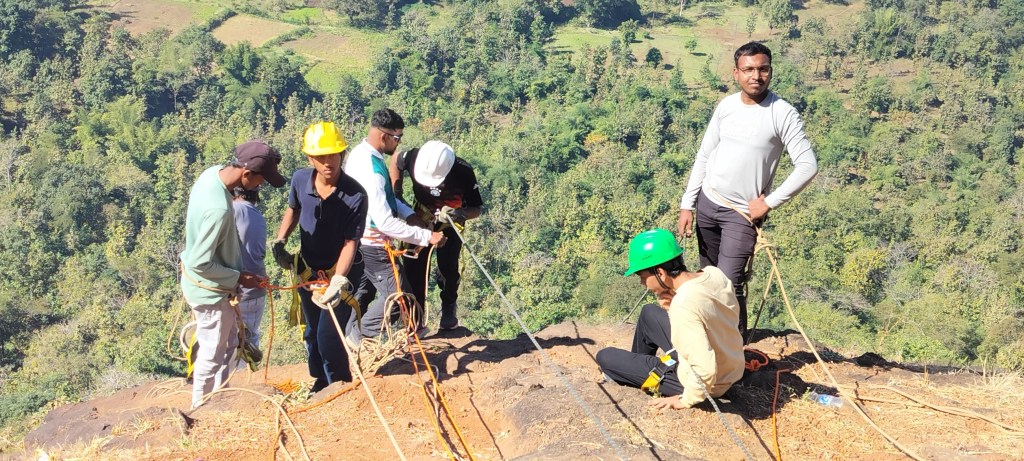
The rural immersion visit to Padamdungri pushed me beyond my usual routine and introduced me to completely new experiences. This it became a chance to learn about a different lifestyle and value the everyday realities of rural communities. During our stay, we engaged in activities like farming, working with cow dung for lipan art, etc. These tasks reflected the daily practices of the local people, helping us better understand how they live along with nature. All-in-All the experience strongly connected to the three strands of CAS: creativity, activity, and service.
CAS Learning Outcomes:
LO1: Identify own strengths and develop areas for growth
Through the whole CAS trip I learned a lot about my strengths and weaknesses. Activities such as cow dung lipan, trekking, farming, etc help my gage my abilities. Physical areas where the part where I felt the strongest as I had prior experience to do long span heavy work. Trekking was the activity that helped my realize how good my physical stats are. Also the constant shoveling in the farming activity helped me realize the same. The part where my abilities were lackluster were in group situation and speaking to a crowd. When we went to the school to talk with the children I was a bit nervous about what should I say. This experience help me to ponder on how should I improve this area. The next time we went to that school for the play I was prepared and delivered my lines with fluency. This whole turmoil help improve on of my weakest abilities.
LO2: Demonstrate that challenges have been undertaken, developing new skills
During the CAS trip to Padamdungri, I took on several challenges that pushed me beyond what I was used to and helped me build new skills. While I was comfortable with physically demanding tasks like trekking and farming, I challenged myself more in areas where I was less confident, especially communication and public interaction. Speaking to the children at the local school was initially difficult, as I felt unsure about what to say and how to engage with them. However, instead of avoiding it, I used that experience to prepare myself better for the next visit. When we returned for the play, I was more confident and able to deliver my lines clearly and effectively. Additionally, activities like cow dung lipan and wall painting required learning completely new techniques, where I had to be patient and pay attention to detail. These experiences helped me develop skills such as adaptability, communication, and persistence. Overall, by taking on these challenges, I was able to grow in areas I was previously uncomfortable with and gain confidence in trying new things.
LO3: Demonstrate how to initiate and plan a CAS experience
Even though the CAS trip to Padamdungri was organized by the school, I showed initiative in how I approached and made use of the experience. Based on my past experiences, I knew I was comfortable with physical tasks, so I planned to focus more on improving areas where I was weaker, especially communication and group interaction. Before the trip, I set a personal goal to actively participate in situations that required speaking and engaging with others, rather than staying in my comfort zone. During the trip, I made sure to involve myself in all activities, but I paid extra attention to moments like interacting with the children at the school and participating in the play. After realizing my hesitation during the first visit, I improved and when we went to the night market I was kind of confident to talk to shopkeepers. This showed that I was not just participating passively but actively planning how to improve through the experience. Overall, I used the trip as an opportunity to work on specific goals and guide my own development.
LO4: Show perseverance and commitment in CAS experiences
During the six-day stay at Padamdungri, I remained consistently involved in all the activities and didn’t shy away from putting in effort, even when things became tiring. Tasks like trekking and farming required sustained energy, especially with continuous physical work like digging and shoveling. Instead of slowing down or losing focus, I kept pushing myself to stay active and complete each task properly.
Beyond the physical side, I also stayed committed in situations that were outside my comfort zone. Interacting with new people and speaking in group settings was not easy for me at first, but I still chose to participate rather than avoid it. Over time, this helped me become more comfortable and confident. Adapting to a new environment, routine, and way of living for almost a week also required consistency and effort. By staying engaged throughout both the easier and more challenging parts of the trip, I was able to show determination and make the most of the experience.
LO5: Demonstrate skills and benefits of working collaboratively
A major part of the Padamdungri trip involved working with others, and I was able to see how important teamwork is in completing tasks effectively. During activities like farming and wall painting, we had to coordinate with each other to divide the work and keep things running smoothly. Since many of these tasks required continuous effort, supporting one another made the process more manageable and efficient. I also realized that collaboration was not just about doing the task, but about communicating clearly and adjusting to different working styles. In group situations, especially during interactions at the school and while preparing for the play, I had to step out of my comfort zone and contribute more actively. Over time, this helped me become more involved in discussions and better at sharing ideas. Working together not only improved the overall outcome of the activities but also helped me build stronger teamwork and communication skills.
LO6: Engagement with issues of global significance
The Padamdungri experience exposed me to real-world issues that go beyond just the trip itself. By living in a rural setting and taking part in daily activities, I was able to observe the clear differences between rural and urban lifestyles. One of the most impactful moments was visiting the local school, where I saw how students learn in an environment with fewer resources compared to what I am used to. This made me think about how access to education and opportunities can vary depending on location and economic conditions. Interacting with the community also helped me understand how people adapt to their surroundings and make the most of what they have. It made me more aware of the challenges faced in rural areas, but also the resilience of the people living there. Overall, this experience encouraged me to reflect on larger social issues like inequality in education and living standards, helping me develop a broader perspective.
LO7: Recognise and consider the ethics of choices and actions
During the Padamdungri trip, I became more aware of how my behavior and decisions could affect the people and environment around me. Being in a rural setting meant that it was important to respect local customs and not treat the experience casually. While taking part in activities like farming and cow dung lipan, I understood that these were not just tasks for us but meaningful practices in their daily lives. This made me more mindful of approaching everything with respect rather than seeing it from only my own perspective. I also realized that small actions, like how we interacted with the villagers or maintained cleanliness in the area, reflected our attitude towards the community. It made me think more carefully about being responsible and considerate in unfamiliar environments. Overall, this experience helped me understand the importance of respecting different ways of life and being aware of the impact of my actions.
Reflection:
Overall, the Padamdungri CAS trip was a unique experience that helped me step out of my normal routine and see a different way of life. Through activities like farming, trekking, and interacting with the local community, I learned new skills and gained a better understanding of rural lifestyles. The trip challenged me not just physically but also in areas like communication and group interaction. It helped me improve in those areas while also making me more aware of differences in opportunities and living conditions. Overall, it was a valuable experience that contributed to my personal growth and perspective.