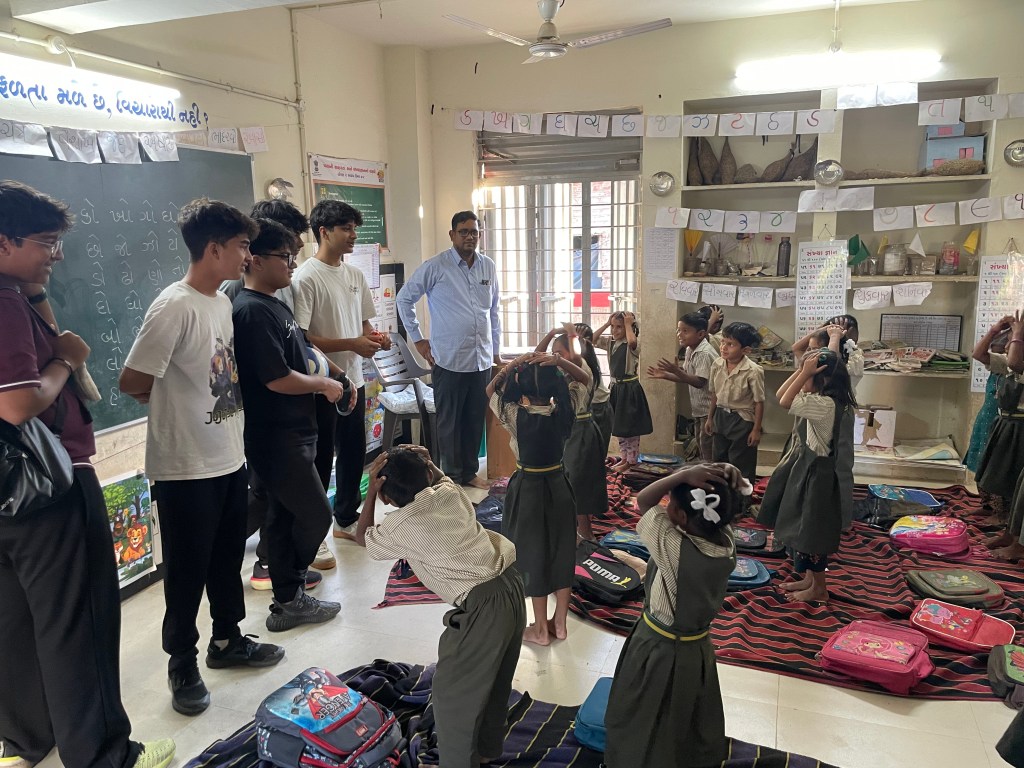
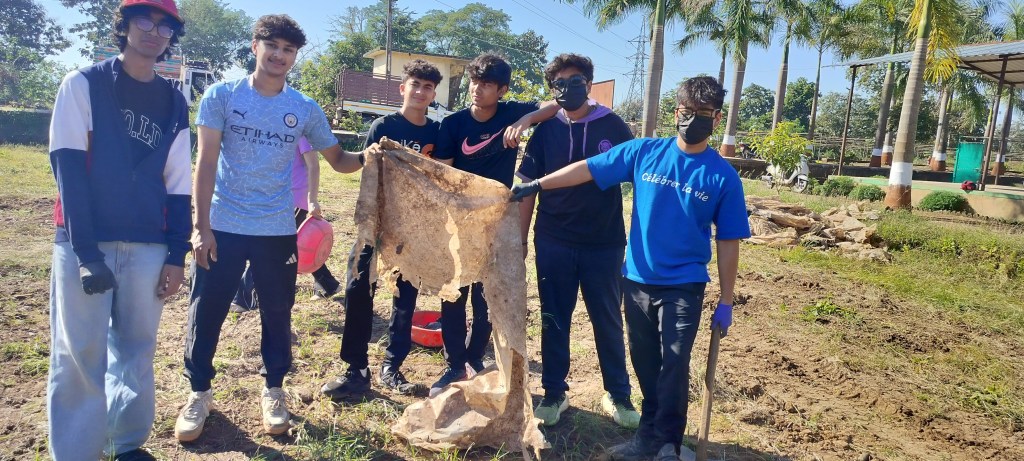
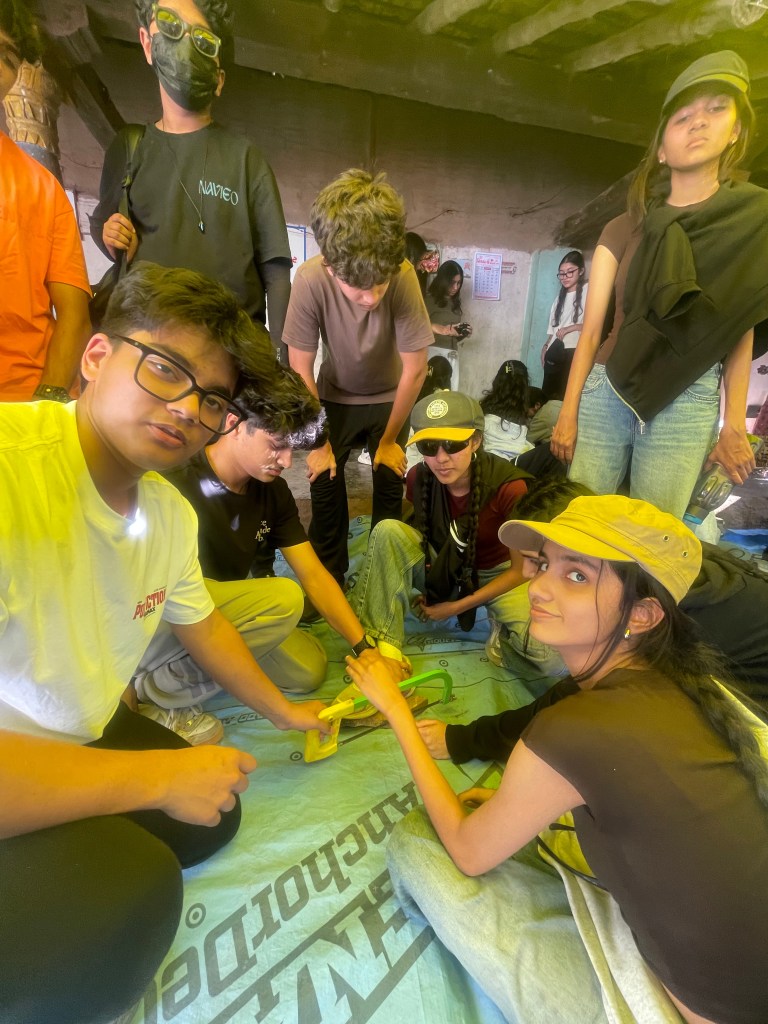
The CAS trip to Padamdungri was a meaningful experience that allowed me to learn about rural life, sustainability, and teamwork. During the trip, I participated in activities such as school cleaning, farming, forest work, bamboo craft, wall painting, and interacting with local villagers and students. These activities helped me understand the importance of community service and environmental responsibility. Trekking, rock climbing, and rappelling also challenged me physically and helped me build resilience and confidence. Working with my classmates and local people improved my collaboration and communication skills. I also learned about sustainable practices such as cow dung farming, turmeric processing, and local markets. Overall, this trip helped me become more open-minded, reflective, and appreciative of different lifestyles, making it a valuable CAS experience that developed my creativity, activity, and service skills.
LO1 – Identify Own Strengths and Areas for Growth
During the trip, I realized that I am comfortable working with others and participating in physical activities like trekking and sports. However, I also noticed that I need to improve my leadership and communication when working with new people. This experience helped me understand my strengths and areas where I can grow.
LO2 – Demonstrate That Challenges Have Been Undertaken, Developing New Skills
The trip involved many challenging activities such as trekking to Toran Dungar, rock climbing, rappelling, and forest work. These activities pushed me out of my comfort zone and helped me develop new physical and teamwork skills.
LO3 – Demonstrate How to Initiate and Plan a CAS Experience
During activities like wall painting, school cleaning, and skit preparation, I helped organize tasks with my group and planned how we would complete the work efficiently. This helped me understand how planning and coordination are important for completing group activities successfully.
LO4 – Show Perseverance and Commitment in CAS Experiences
The camp lasted several days and involved continuous participation in different activities. Even when activities were physically tiring, I stayed committed and completed them with my group, showing perseverance throughout the experience.
LO5 – Demonstrate Skills and Benefits of Working Collaboratively
Many activities such as farming, school cleaning, sports, and preparing the skit required teamwork. Working together with my classmates helped us complete tasks faster and more effectively. I learned the importance of cooperation, communication, and respecting others’ ideas.
LO6 – Demonstrate Engagement with Issues of Global Significance
Through activities like farming, learning about turmeric processing, cow dung farming, and forest work, I understood the importance of sustainability and environmental conservation. It helped me realize how rural communities depend on natural resources and why protecting the environment is important.
LO7 – Recognize and Consider the Ethics of Choices and Actions
While interacting with the local community and participating in service activities, I learned the importance of respecting different cultures and lifestyles. This experience helped me think about how our actions can impact the environment and other communities.
Conclusion
The Padamdungri CAS trip was a valuable learning experience that combined creativity, activity, and service. It helped me develop teamwork, resilience, and awareness about sustainability and rural life. Through the different activities and interactions with the local community, I gained new skills and a deeper appreciation for nature and community service. Overall, this experience contributed positively to my personal growth and my CAS journey.