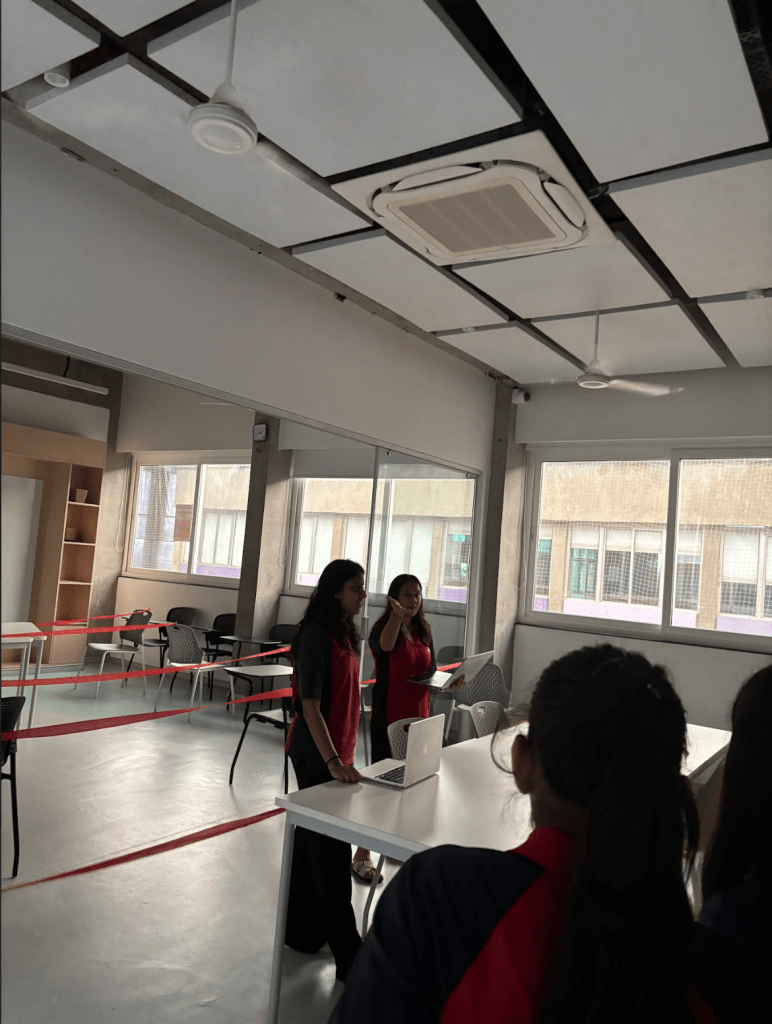
As a member of the student-led club BrainSTORMers, I actively participated in organizing and contributing to discussions and activities focused on critical thinking, awareness, and problem-solving. The purpose of the club was to create a platform where students could engage in meaningful conversations, share perspectives, and build intellectual curiosity. Through this service experience, I aimed to contribute to creating a safe and stimulating environment where ideas could be exchanged respectfully and thoughtfully.
Learning Outcome 3: Demonstrate how to initiate and plan a CAS experience
Being part of BrainSTORMers required planning sessions, organizing discussion themes, and preparing content that would engage participants. Even when tasks were divided, I had to independently prepare my contributions and ensure they aligned with the purpose of the session. Planning was sometimes challenging because topics had to be relevant, thought-provoking, and appropriate for the audience. I learned how to structure ideas clearly, anticipate possible responses, and manage time effectively during discussions. This experience strengthened my ability to plan intellectual activities and initiate meaningful conversations. It has made me more confident that organizing future discussions or projects will be easier because I now understand the importance of preparation and clarity.
Learning Outcome 6: Demonstrate engagement with issues of global significance
BrainSTORMers often revolve around topics connected to global issues such as mental health awareness, social responsibility, inequality, and decision-making in modern society. These issues are globally significant because they impact communities worldwide and influence how individuals think and behave. Engaging in discussions about such topics helped me become more informed and open-minded. It allowed me to understand different perspectives and recognize the complexity of global challenges. Being part of a platform that encourages awareness made me feel responsible and more connected to the broader world beyond my immediate environment.
Learning Outcome 7: Recognize and consider the ethics of choices and actions
An important ethical aspect of BrainSTORMers was ensuring that discussions remained respectful, inclusive, and sensitive to diverse viewpoints. Since we discussed real-life issues, it was essential to avoid misinformation, stereotypes, or biased judgments. This ethical responsibility affected me directly because the way I expressed my opinions could influence others. Before this activity, I viewed discussions mainly as a way to share ideas. However, I realized that intellectual spaces require accountability and empathy. I learned to think carefully before speaking and to respect differing opinions, even when I disagreed. This experience strengthened my understanding that ethical awareness is essential in leadership, communication, and service.
Learning Outcome 5: Demonstrate the skills and recognize the benefits of working collaboratively
BrainSTORMers was built on collaboration. Discussions only became meaningful when participants actively listened and built on each other’s ideas. Working with others in an intellectual setting required patience, openness, and adaptability. I learned how to contribute without dominating conversations and how to encourage quieter members to participate. This experience reinforced the importance of teamwork in service activities and showed me that collective thinking often produces stronger ideas than individual effort.
Conclusion
Being part of BrainSTORMers was a meaningful service experience that strengthened my planning skills, ethical awareness, and engagement with global issues. It helped me understand that service is not limited to physical action—it also includes creating spaces for dialogue, awareness, and growth. Through collaboration and responsibility, I developed greater confidence in my ability to contribute thoughtfully to my community.