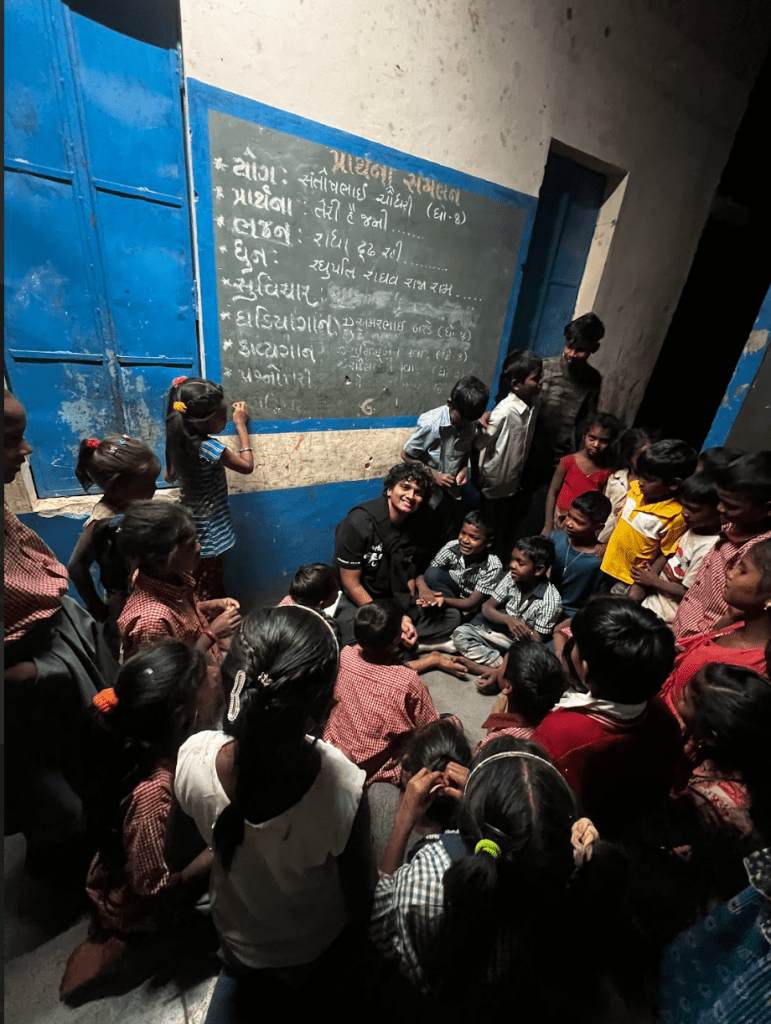
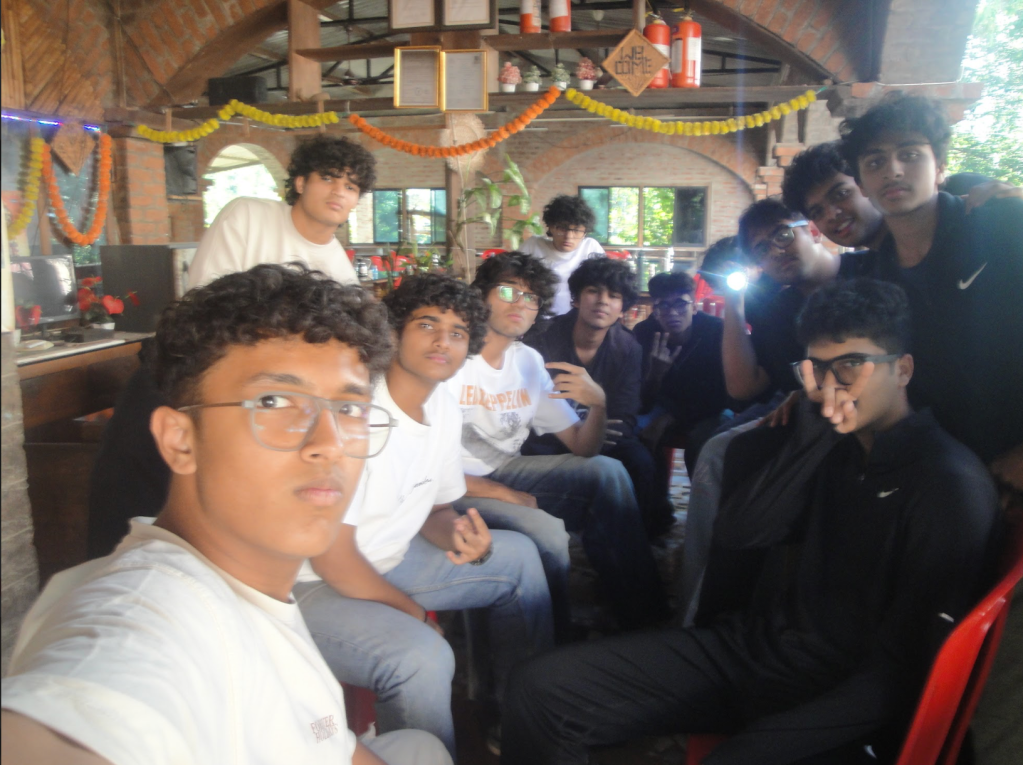
As part of my CAS journey, I participated in a six-day rural immersion trip to Mokhamal, Dang, with the aim of gaining first-hand experience of rural life. During the trip, I engaged in various activities such as interacting with local tribal communities, working with children in a government school, participating in group games, and trekking in the mountains. We also visited the local haat (market), where I observed how people purchase essential goods and sustain their daily lives.
This experience challenged me to adapt to different living conditions, including changes in sleep schedules, food habits, and communication styles. It gave me a deeper understanding of the contrast between rural and urban life and helped me recognize challenges such as limited access to healthcare, education, and employment opportunities in rural areas.
Learning Outcome 1 – Identify own strengths and develop areas for growth
During this experience, I identified adaptability as one of my key strengths. I adjusted well to changes in routine, including early mornings and simple living conditions. I also adapted to healthier, fixed meal timings, which helped me stay active throughout the trip
However, I recognized areas for growth. Initially, I struggled with basic facilities such as bathing due to limited resources, but I gradually adapted. I also faced issues with dehydration, which affected my health temporarily. By becoming more mindful of my needs, I improved my self-awareness and learned the importance of taking care of my well-being.
Learning Outcome 2 – Demonstrate that challenges have been undertaken, developing new skills
One of the major challenges I faced was physical exhaustion, especially during trekking activities. Climbing uphill after descending mountains was particularly difficult and caused fatigue. By observing and learning from local people, I adopted techniques such as controlled breathing and maintaining a steady pace.
This helped me overcome the challenge and develop new skills such as endurance, stamina, and mental resilience. It also taught me the importance of patience and adapting to unfamiliar environments.
Learning Outcome 3 – Initiate and plan a CAS experience
Although the trip was organized by the school, I took initiative by mentally preparing myself for the experience and actively engaging in all activities. I ensured that I participated fully in each task, from working in the school to interacting with locals.
I also made an effort to understand the purpose of each activity and how it contributed to my learning. This proactive approach helped me gain the most out of the experience.
Learning Outcome 4 – Show perseverance and commitment in CAS experience
I demonstrated perseverance during activities that required patience and continuous effort, such as bamboo basket-making. The process was challenging, as the bamboo often broke or did not take the desired shape, requiring repeated attempts.
Despite this, I remained committed and continued working until I successfully completed the task. This experience strengthened my persistence and showed me the importance of dedication when learning new skills.
Learning Outcome 5 – Demonstrate skills and benefits of working collaboratively
Collaboration played an important role throughout the trip. One example was when we worked together to build a shed fence for plants. Tasks were divided among group members, allowing each person to focus on a specific responsibility.
This teamwork improved efficiency and ensured successful completion of the task. Through this, I developed skills such as communication, coordination, and cooperation, and understood the importance of working together towards a common goal.
Learning Outcome 6 – Engagement with issues of global significance
The trip exposed me to global issues such as inequality in access to resources, healthcare, and education. Interactions with the local community highlighted the lack of infrastructure and essential services.
Working in the government school showed the challenges faced by students due to limited educational resources. I realized that these issues are not limited to Dang but are experienced by rural communities worldwide. This increased my awareness of global challenges and the need for sustainable development and social equity.
Learning Outcome 7 – Recognise and consider the ethics of choices and actions
This experience made me reflect on the ethical impact of my daily choices. Observing limited resources in rural areas made me more conscious of overconsumption in urban lifestyles.
I noticed how carefully children used their materials due to scarcity, which made me rethink my own habits. This helped me understand the importance of using resources responsibly and making more ethical and sustainable choices in my daily life.
SDGs Connection
This rural immersion experience connected with several Sustainable Development Goals, including Zero Hunger, Good Health and Well-being, Quality Education, Clean Water and Sanitation, and Decent Work and Economic Growth. I observed issues such as malnutrition, lack of access to clean water, limited educational infrastructure, and unstable sources of income
These observations helped me understand how these global goals are interconnected and how challenges faced by rural communities highlight the importance of working towards sustainable and equitable development.