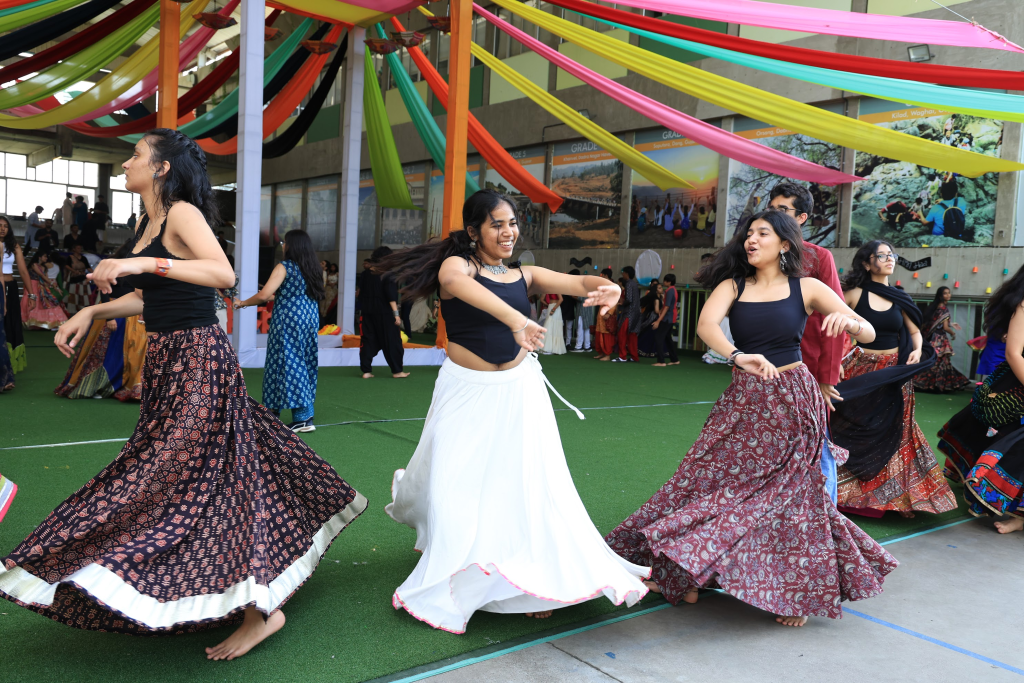
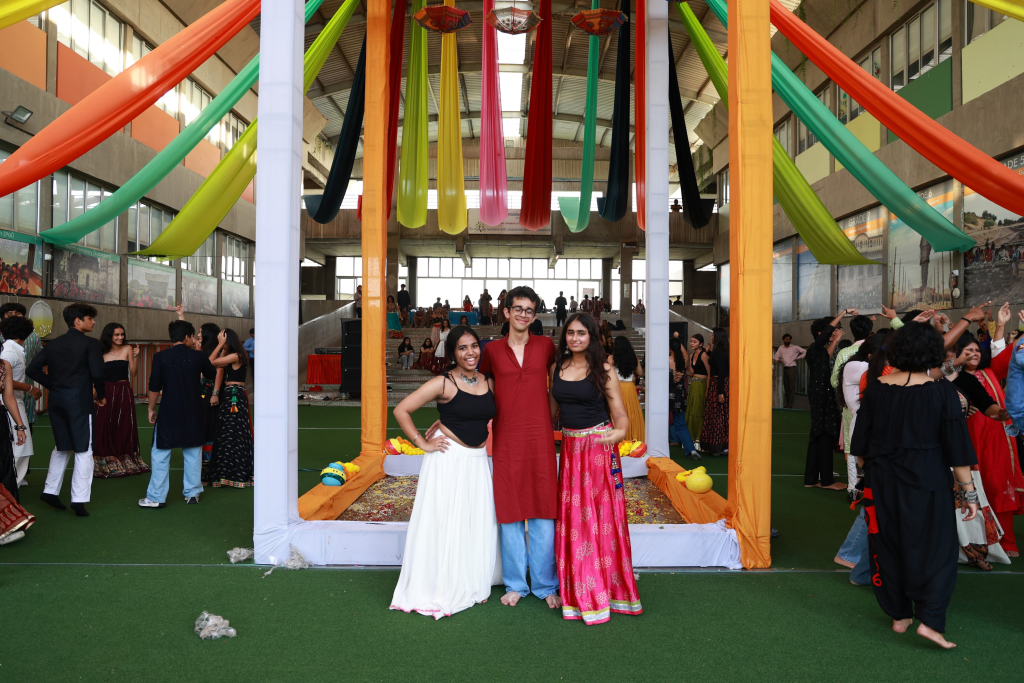
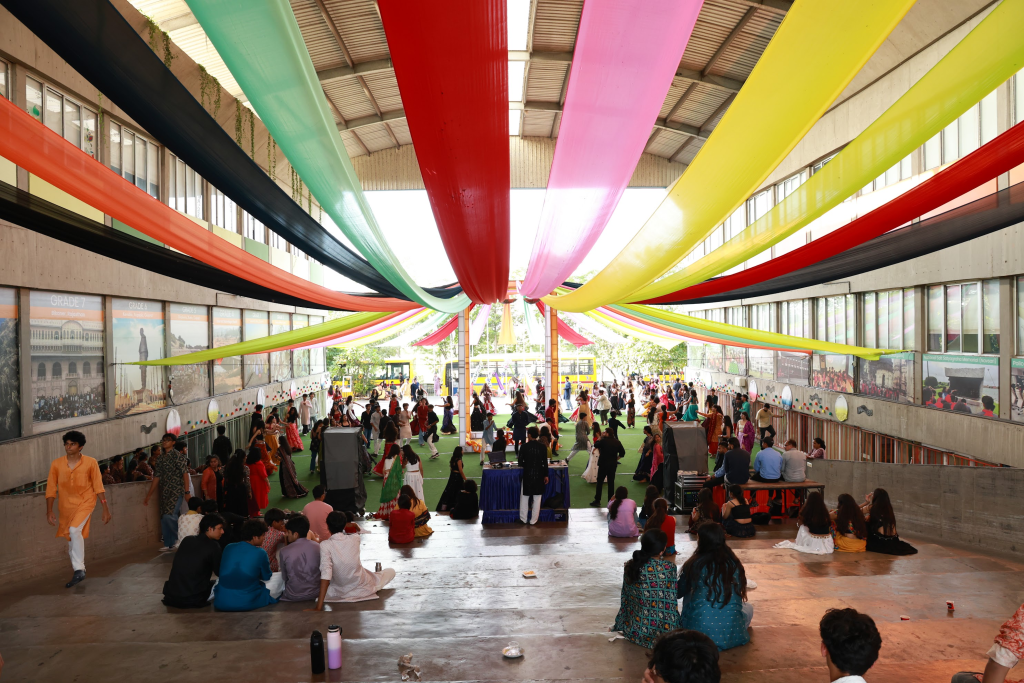
On the 25th of September, I had the opportunity to take part in our school’s Garba Fest — a lively celebration of traditional Indian music, dance, and community spirit. The event allowed me to immerse myself in a vibrant cultural practice, while also developing physical coordination, endurance, teamwork, and a deeper understanding of the heritage behind Garba. Through consistent practice, group rehearsals, and my performance at the main event, I was able to enhance my performing arts skills and experience firsthand how cultural traditions can bring people together, fostering connection and shared enjoyment.
Learning Outcome 1 – Identify own strengths and develop areas for growth
During my preparation and participation in Garba, I discovered several strengths and areas for improvement. I realized that I have good stamina and physical endurance, allowing me to dance continuously without losing energy. I also recognized that while I was comfortable with basic Garba steps, my skill level was not advanced, which encouraged me to challenge myself by learning more intricate movements. Practicing these new steps required patience and persistence. I also focused on adapting to faster tempos, which helped me improve my timing and responsiveness. This experience increased my awareness of my physical capabilities and highlighted areas, such as refining complex footwork and accelerating my learning pace, where I can continue to grow.
Learning Outcome 2 – Demonstrate that challenges have been undertaken, developing new skills
Participating in Garba came with several challenges, including mastering complicated sequences and staying synchronized with a large group at a quick rhythm. To overcome these challenges, I divided the choreography into smaller sections, practiced them repeatedly, and observed experienced dancers to improve my technique. At times, keeping up with fast transitions or recalling extended sequences was difficult, but persistent practice helped me develop better coordination, timing, and spatial awareness. Additionally, by receiving and applying feedback during rehearsals, I was able to steadily improve my performance. This process strengthened not only my technical dance skills but also my resilience, focus, and ability to perform under pressure.
Learning Outcome 4 – Show perseverance and commitment in CAS experience
Preparing for the Garba Fest required dedication and sustained effort. I began practicing several days in advance, both individually and with peers who were more experienced, to polish my technique and improve my stamina. This consistent commitment enabled me to perform confidently during the event, maintaining energy, rhythm, and focus throughout. The experience highlighted the importance of discipline and perseverance, and the satisfaction I felt at delivering a complete and spirited performance reinforced the value of hard work and determination.
Learning Outcome 5 – Demonstrate skills and benefits of working collaboratively
As a group dance, Garba required strong collaboration and communication. I learned to coordinate movements, maintain spacing, and adjust my steps to synchronize with others. Verbal cues and non-verbal signals were essential in maintaining alignment, especially during fast-paced sequences. Supporting my peers when mistakes occurred, and adapting to ensure smooth group performance, strengthened my teamwork skills. The shared sense of achievement and collective joy after performing emphasized the value of cooperation, mutual responsibility, and the power of collaborative effort in achieving a polished and enjoyable presentation.
Learning Outcome 6 – Engagement with issues of global significance
Although Garba is a traditional Indian dance, participating in the event highlighted the broader importance of cultural preservation. The festival featured traditional foods and rituals, which I engaged with to honor my heritage and promote awareness of cultural continuity. Celebrating Garba in a diverse school environment emphasized the need to value and sustain cultural traditions while respecting diversity. It reinforced the idea that festivals can serve as meaningful opportunities to pass on customs and identity to future generations, contributing to broader global conversations about cultural preservation and sustainability.
Conclusion
Being part of the Garba Fest was an enriching and meaningful CAS experience that combined cultural exploration, physical activity, and teamwork. It strengthened my stamina, coordination, and confidence, while deepening my appreciation for India’s cultural heritage. Learning new choreography challenged me to expand my skills, and working with peers reinforced the importance of collaboration and communication. Engaging with traditional practices and foods encouraged reflection on cultural identity and the significance of heritage in modern school life. Overall, this experience demonstrated how performing arts can connect people, celebrate diversity, and create a sense of belonging that goes beyond the performance itself.