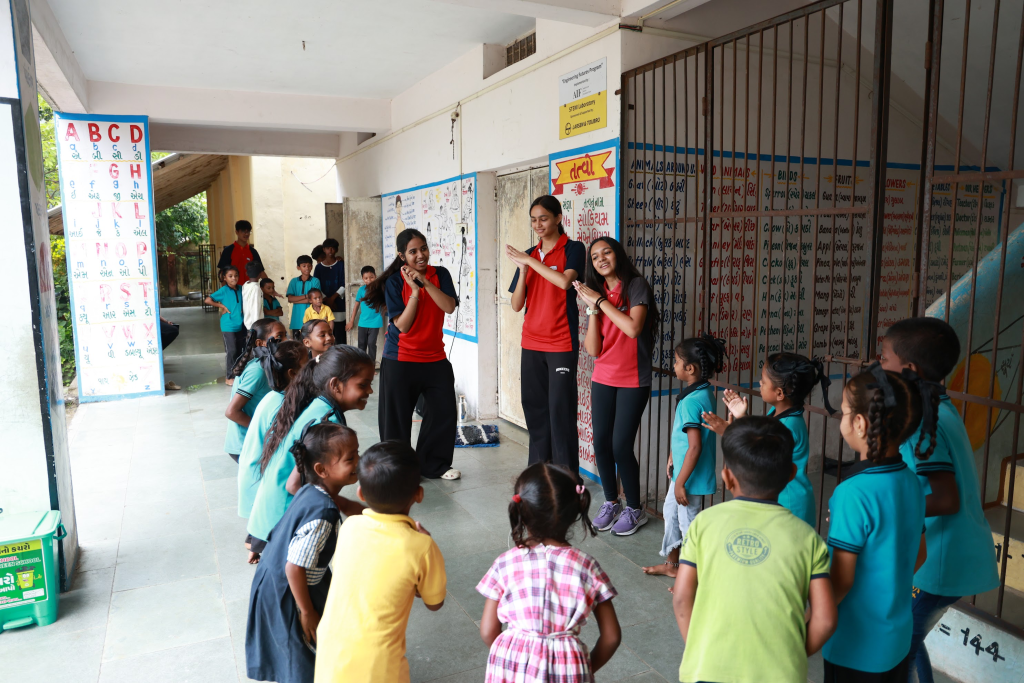
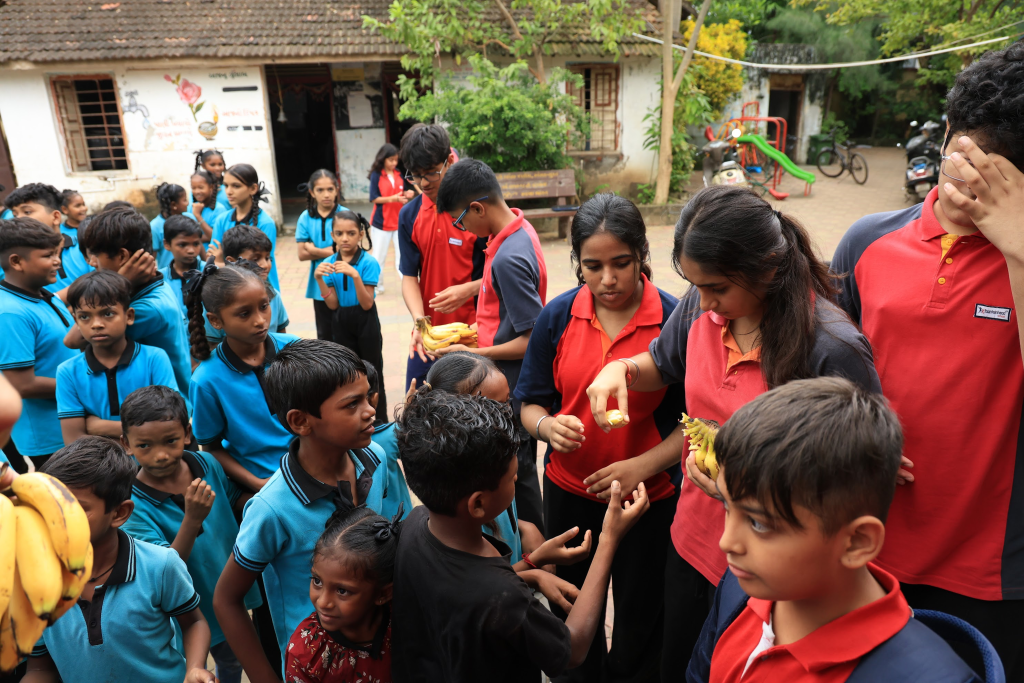
As a Project Coordinator at Earth’s 911, a youth-led not-for-profit organization, I became aware of the unequal access to quality education faced by students in under-resourced communities. To respond to this issue, Earth’s 911, in collaboration with Fountainhead School, conducted the Experiential Learning and Transformation Program at Dihen Primary Government School. The aim of this initiative was not only to support academic learning but also to create an engaging and inclusive environment for over a hundred students.
Within this program, I coordinated three clubs — Dance, Fitness, and Languages. These clubs were designed to support students’ physical health, self-expression, and communication skills while making learning enjoyable. Through regular visits and structured sessions, we aimed to build students’ confidence and curiosity beyond traditional classroom teaching.
As a Project Coordinator, I was responsible for planning sessions, coordinating volunteers, and ensuring smooth execution during each visit. This experience allowed me to actively contribute to addressing the global issue of unequal access to quality education through hands-on service and leadership.
Learning Outcome 1 – Identify own strengths and develop areas for growth
Through this experience, I identified my strengths in organization, communication, and coordination. Managing three clubs required clear planning and regular communication with volunteers to ensure sessions were effective. I was able to explain activities clearly to both volunteers and students, which helped create a comfortable and engaging learning environment.
However, I also recognized an area for growth in delegation. Initially, I took on too many responsibilities myself to ensure everything went according to plan. Over time, I learned to trust my team and delegate tasks such as leading warm-ups, dance routines, or language activities. This helped me manage my workload better and allowed volunteers to take more ownership of the sessions.
Learning Outcome 2 – Demonstrate that challenges have been undertaken, developing new skills
Coordinating the Dance, Fitness, and Languages clubs involved several challenges. Volunteer availability varied, resources were sometimes limited, and students had different learning needs and energy levels. When sessions did not go as planned, I adapted activities to keep students engaged.
Through these challenges, I developed skills in problem-solving, classroom management, and adaptability. I also strengthened IB ATL skills such as self-management, social skills, and thinking skills by reflecting on each session and improving future plans. These experiences helped me become more confident in handling unexpected situations.
Learning Outcome 3 – Initiate and plan a CAS experience
This project required continuous planning and initiative. I helped design sessions for each club based on students’ needs and interests. Dance sessions focused on expression and teamwork, fitness sessions encouraged physical activity through games, and language sessions used interactive methods such as storytelling and basic conversation.
I contributed to organizing materials, planning bimonthly visits, and preparing backup activities. I regularly spent time outside school coordinating with volunteers to ensure sessions ran smoothly. This planning process strengthened my organizational skills and helped me understand the importance of preparation in long-term CAS projects.
Learning Outcome 4 – Show perseverance and commitment in CAS experience
Maintaining regular involvement in this project required commitment, especially while balancing academics and other responsibilities. There were times when managing time was challenging, but I remained consistent because continuity was important for the students.
Even when faced with last-minute changes or volunteer shortages, I ensured sessions continued by adjusting plans or stepping in to help. Seeing students participate enthusiastically in the clubs motivated me to stay committed and reinforced the value of perseverance in CAS experiences.
Learning Outcome 5 – Demonstrate skills and benefits of working collaboratively
Collaboration was essential to the success of the clubs. I worked with volunteers who had different strengths and ideas, and I learned to coordinate effectively with them. By assigning roles based on individual skills, such as leading choreography or facilitating language games, I helped ensure productive teamwork.
Regular communication and feedback encouraged cooperation and problem-solving. This experience taught me that working collaboratively increases impact and creates a supportive learning environment for everyone involved.
Learning Outcome 6 – Engagement with issues of global significance
This project addressed the global issue of unequal access to quality education, aligning with UN SDG 4 (Quality Education) and SDG 10 (Reduced Inequalities). Students at Dihen Primary School have limited exposure to extracurricular and experiential learning opportunities.
Through the Dance, Fitness, and Languages clubs, we aimed to support holistic development by promoting confidence, communication, and well-being. This experience helped me understand how local community service can contribute to addressing global challenges.
Learning Outcome 7 – Recognize and consider the ethics of choices and actions
Ethical considerations guided my actions throughout the project. I ensured that students were treated with respect and encouragement, and that activities were inclusive and supportive of different abilities. Volunteers were also guided to maintain sensitivity and fairness in their interactions.
I made sure responsibilities were shared fairly among volunteers and that communication remained transparent. This experience helped me understand the importance of ethical decision-making, empathy, and responsibility in leadership roles.
Conclusion
Coordinating the Dance, Fitness, and Languages clubs at Dihen Primary School was a meaningful part of my CAS journey. This experience helped me grow as a student leader while deepening my understanding of educational inequality. It showed me that consistent effort, collaboration, and reflection can create meaningful impact. Watching students become more confident and engaged reaffirmed my belief in the importance of experiential learning and long-term service.