About the Activity
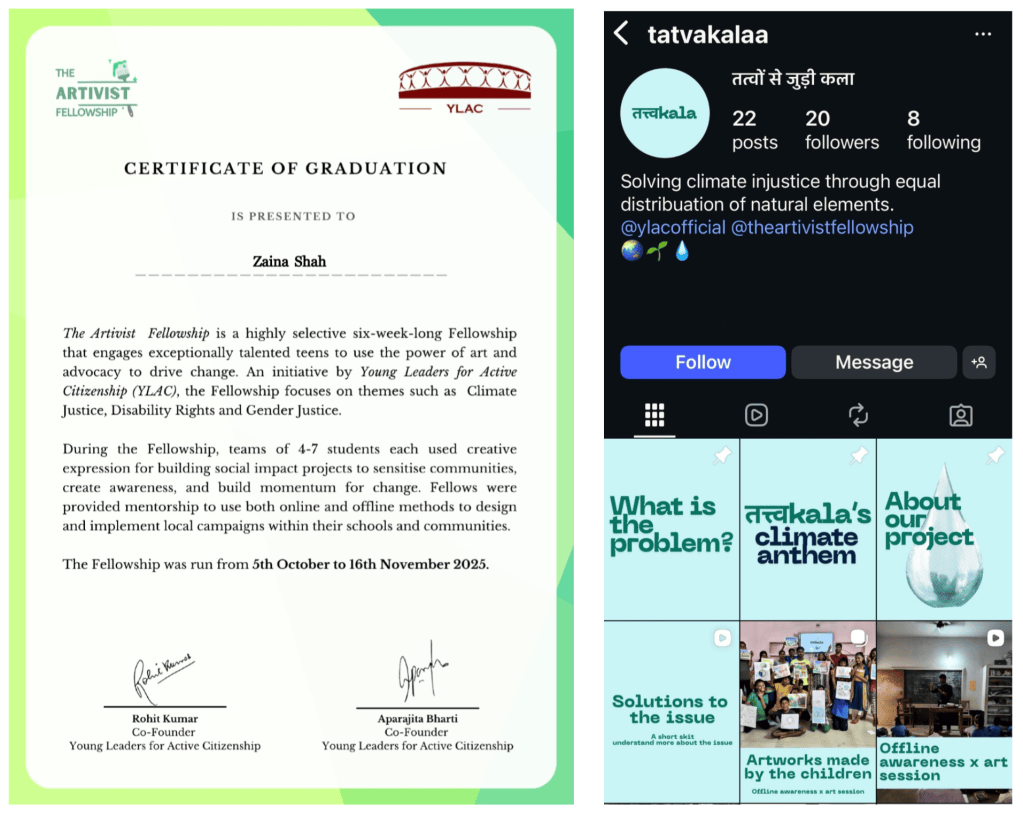
During the YLAC Artivist Fellowship, I worked with a team to develop an art-based advocacy campaign addressing the issue of Delhi’s trash mountains. We conducted interviews with local residents affected by the problem and used art as a medium to communicate their experiences and spread awareness. As part of our campaign Tatvakala, we also created an Instagram page where we regularly posted our artworks, research findings, and updates about our campaign. The platform allowed us to document our progress and share our message with a wider audience beyond our immediate community.
LO5 – Collaborative Skills
Our campaign required close teamwork. Each member contributed different strengths, from research and interviews to creating artworks and managing our online outreach. Some members focused on visual storytelling while others handled the design and posting of content on our Instagram page. By combining our skills, we were able to create impactful posts that visually communicated the issue and the stories we had gathered. Working together helped us organize our campaign effectively and ensured that our message reached a larger audience.
LO6 – Engagement with Issues of Global Significance
The issue of Delhi’s trash mountains is connected to broader concerns of waste management, environmental sustainability, and climate justice. Through our Instagram campaign, we shared artworks, informational posts, and updates about the issue to educate viewers about the environmental and social consequences of unmanaged waste. By posting consistently and engaging with viewers online, we were able to raise awareness about the problem and encourage people to reflect on responsible consumption and environmental responsibility.
LO7 – Recognize and Consider the Ethics of Choices and Actions
While interviewing residents affected by the trash mountains, we were careful to represent their stories respectfully and accurately. When sharing these insights through our Instagram posts and artworks, we ensured that the information was presented ethically and sensitively without misrepresenting their experiences. This process helped me understand the importance of responsible storytelling and the ethical considerations involved when using art and social media to advocate for social and environmental issues.